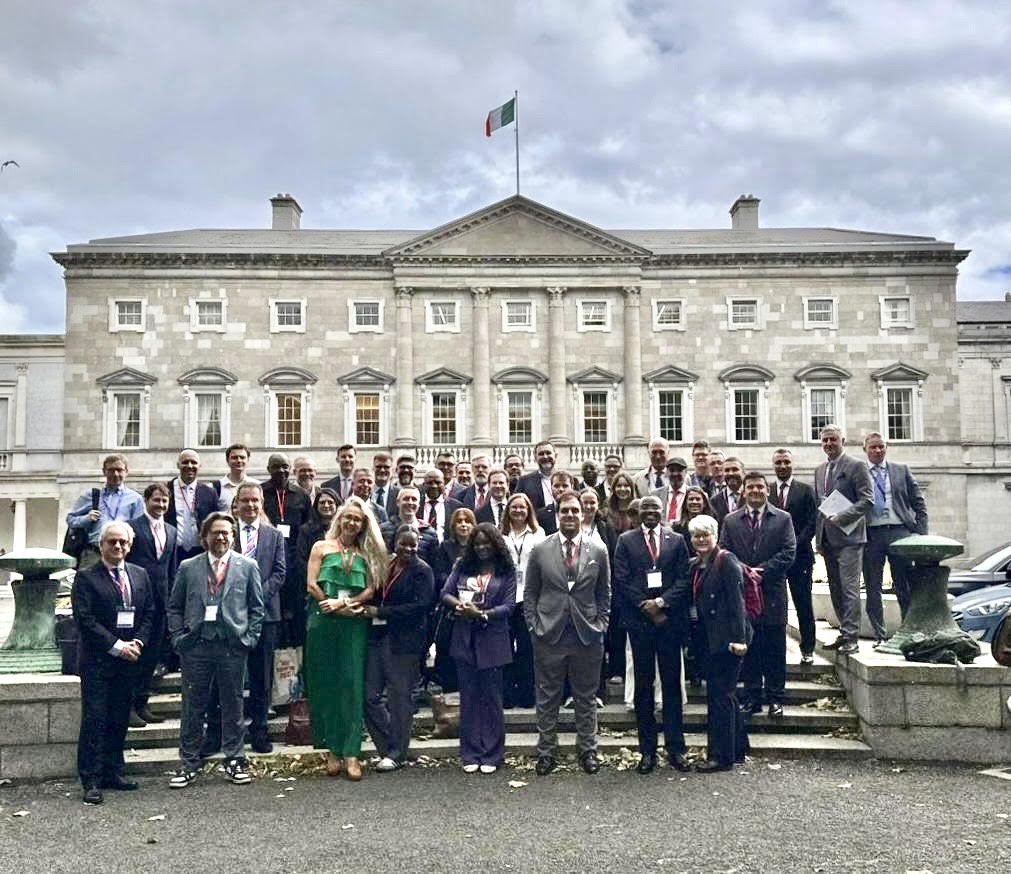
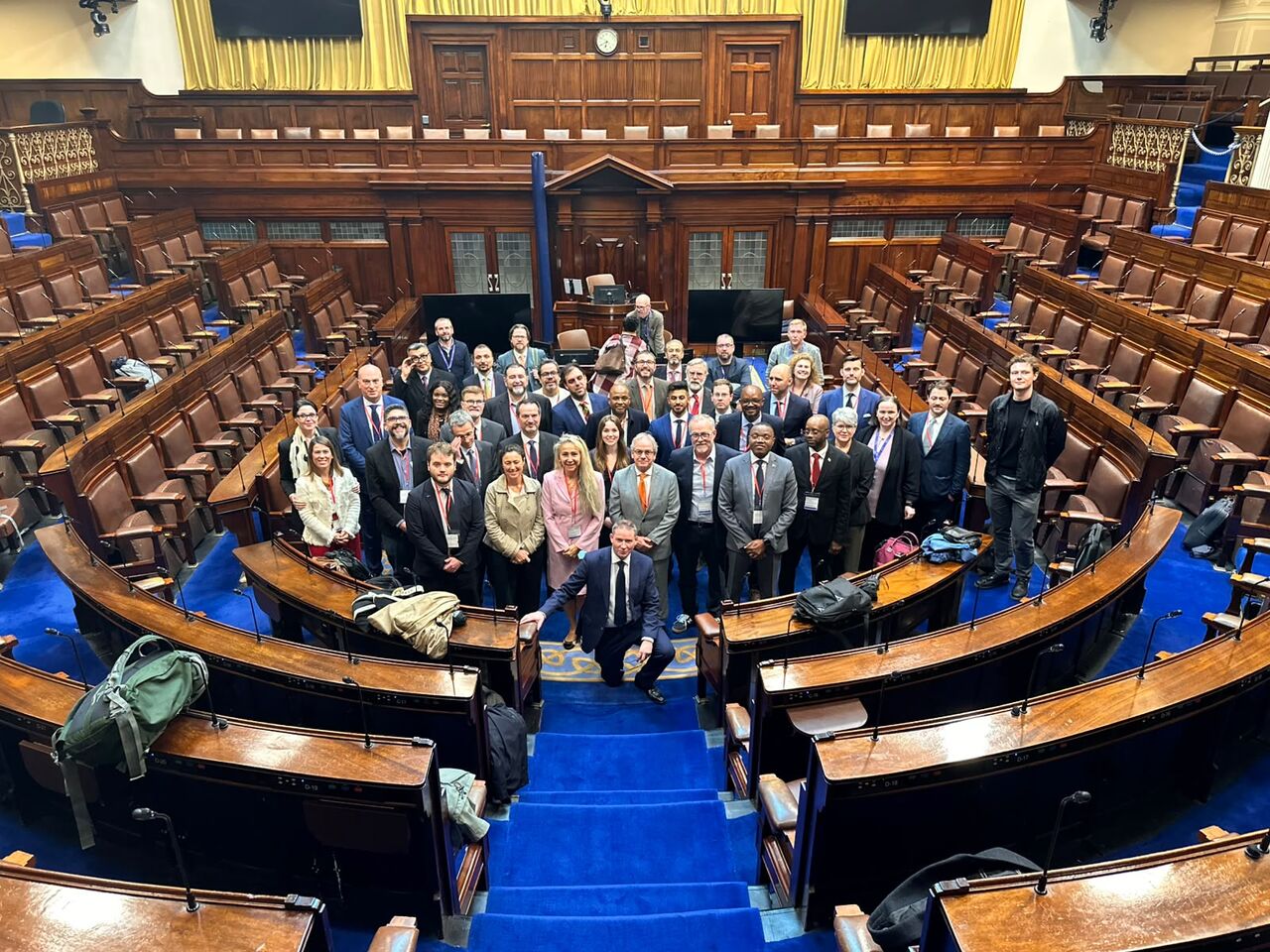
AI and parliamentary modernization were front and center at a three-day conference hosted by the Houses of the Oireachtas — the Irish Parliament — and Bússola Tech during the first week of June. Bússola Tech is a global think tank based in Brazil focused on the modernization of parliaments. They work to strengthen peer-to-peer collaboration and knowledge sharing between the parliamentary community and practitioners, and co-host events with parliaments, NGOs, and multi-lateral organizations.
This conference touched on a wide variety of issues common to representative bodies, no matter their structure, relating to data management and the adoption of AI. More than sixty attendees from dozens of parliaments joined, including representatives from the United States. Participants included secretaries general — the senior civil servant in a chamber, roughly equivalent to the Clerk of the House — committee clerks, parliamentary counsels, legislative administrators, parliamentary technologists, and a handful of representatives from NGOs focused on parliamentary modernization.
The rules of the proceeding prevent me from sharing who said what. But I would like to share some of the ideas that I am taking away from the conference.
What Legislative Design Makes Possible
These international exchanges are valuable because they provide insight into the operations and decisions of our own legislatures. Some major challenges for Congress are settled policy or practice in other countries. Often, specific challenges like sustaining funding for modernization — or investments in the legislature generally — are a consequence of the design of the legislature itself.
In some cases, administrative staff remain in office longer than the head of the legislature, while in others, that equivalent of our Speaker of the House is not a partisan position but an institutional-oriented one. Accordingly, staff may view themselves as internal advocates for the institution or merely as functionaries carrying out the wishes of political leaders. It may also matter a great deal whether the administrative staff is led by a single head, such as a secretary general, or by multiple officers.
Sustaining funding for parliamentary modernization also seems correlated with the political organization of the underlying representative democracy in whether a country has two major parties or more than two.
Shared Projects, Shared Roadblocks
International events like this conference illustrate how there is a lot of overlap across the projects that parliaments try to build. The political and administrative arguments concerning adoption can be roadblocks others can learn from.
These off-the-record discussions also can surface the actual underlying issues hindering progress, which may be different from what is stated publicly.
For example, many parliaments use AI to transcribe their floor and committee proceedings. The arguments for doing so are speed, cost, transparency, and free accessibility of the information. Arguments made by those against AI-generated transcripts are often framed in terms of questionable accuracy. But accuracy is not always the real issue: Sometimes, members wish to retain the ability to alter their remarks before they are published. Other times, internal staff are afraid they will lose their jobs. Other countries’ experiences can point to ways to address both of those concerns and allow a transcription process to proceed.
Solving Parliamentary Problems in Parliamentary Ways
It is also interesting to see how parliaments solve their own unique problems. One parliament has a chamber in which its members vote by raising hands out of long-held tradition. It built a tool to recognize that practice and speed up voting. Another chamber had trouble with members voting on behalf of other members, or claiming presence for committee proceedings. To solve that problem, it uses a combination of fingerprint and facial recognition.
The AI Question
Unsurprisingly, how to deal with AI was a major topic of discussion in Dublin. Attendees all are struggling with when and how to bring AI into parliamentary processes, and with the reality that some members will use the technology beyond established guardrails or in the face of prohibitions.
The conference included optimistic and pessimistic views on the benefits of AI adoption by parliaments. Some AI optimists hoped the future will bring an AI-empowered legislature, in which the technology monitors official data sets and the news, identifies emerging problems, compiles research, and proposes solutions for a legislature to vote on. AI pessimists, however, worry about the concentration of power AI creates in society and its undercutting the legislature and short-circuiting the deliberative process. Others expressed skepticism about the reliability of AI products and concerns about them being economically and environmentally unsustainable.
Guardrails Are Not Enough
Although specific guardrails for AI use are important, reformers and modernizers also need to be thoughtful about the incorporation of AI into legislative work generally. Legislatures have been using forms of what we call artificial intelligence for decades, from spellcheck and OCR to natural language processing, however modern generative AI is a different animal.
Whether legislatures should build generative AI into their business processes risks creating dependencies on technology whose price may change dramatically. Think about what happened to Uber when the venture capital subsidies ended. It also raises questions of sovereignty — who owns the data, and is it kept secure — as well as questions of accuracy and externalities, including harms wrought on the environment.
Should parliaments trust big technology companies to create tools that protect users and are in their – and therefore the public’s – best interests? Or should governments create publicly owned versions of these technologies?
Using AI to create deterministic tools, or parliamentary use of small language models instead of large ones, may help mitigate some of the major risks. For example, the comparative print suite, developed by the House of Representatives, uses natural language processing and its results are consistent over time. This kind of tool can be debugged and trusted to reach a reliable result. These are design questions facing legislatures, and they are very different from simply throwing everything up into Claude or ChatGPT.
The Value of Speaking Frankly Across Legislatures
The ability to get into granular detail about the challenges and opportunities around making our respective legislatures work — in a kind of convening that often works best in person and not for attribution — is a welcome opportunity for legislative senior staff and technology practitioners to keep up to speed with a rapidly changing environment.
The context of our era of change also is something parliamentary professionals hold in common. Our societies have seen a rise in tremendous economic inequality that allows the very wealthy to fund advocacy endlessly. We struggle with technology that supports the diffusion of information and misinformation with minimal human intervention, which challenges the very ability of legislatures to serve as deliberative policymaking bodies.