Congress Press

A combination of images of Derek Willis, creator of Congress Press, and information from his website about the number of press releases they have.

Our first featured project is from one of the legends in congressional data and data journalism, Derek Willis of the Merrill College of Journalism at the University of Maryland. This spring, he released Congress Press, a spiffy update of his efforts to collect and share congressional members’ press releases he first started at ProPublica.

Continue reading

Maker Space

An AI generated illustration of a maker space.

The community of people inside and outside Congress who are tinkering with different legislative datasets and code to produce useful tools is growing rapidly. It’s a sign of the success of efforts like the Congressional Data Task Force and Congressional Hackathon and open mindedness of stakeholders across the House and Senate to encourage experimentation. That community is still somewhat decentralized, though, so discovering new projects can be a challenge.

To that end, we’re starting a new semi-regular series to highlight individual projects large and small called Maker Space to build greater awareness of the cool stuff out there.

Continue reading

Congressional Data Task Force Recap: March 20, 2026

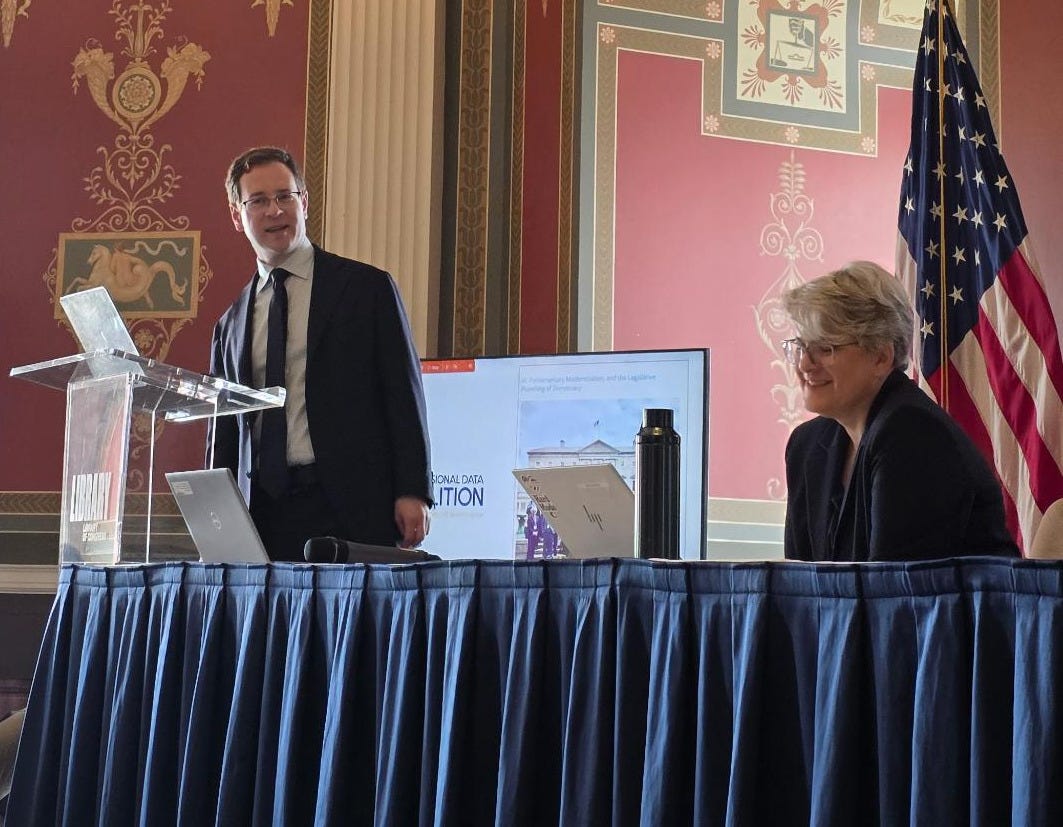
The Congressional Data Task Force convened March 20, benefiting from a nice venue upgrade inside the Capitol Visitor Center. These quarterly meetings highlight the great collaborative work taking place behind the scenes across legislative branch offices to unlock the enormous amount of information about what Congress is doing and has done in the past. It’s work that levels the playing field for members of Congress, legislative staff, and the public in terms of situational awareness and deeper institutional knowledge, which is why we think it’s so important.

Summaries of previous CDTF meetings can be found on the website using the “Congressional Data Task Force” tag. 

Continue reading

2026 Congressional Data Task Force Meeting Dates Announced

The Congressional Data Task Force announced dates for 2026 task force meetings. They are: March 26, 2026, June 11, 2026, and December 3, 2026.

The Congressional Hackathon, which usually takes place in September, will count as their fourth quarterly meeting. Also, if the pattern holds, the Library of Congress will hold a meeting with users of Congress.gov in September.

Congressional Data Task Force Recap: December 12, 2025

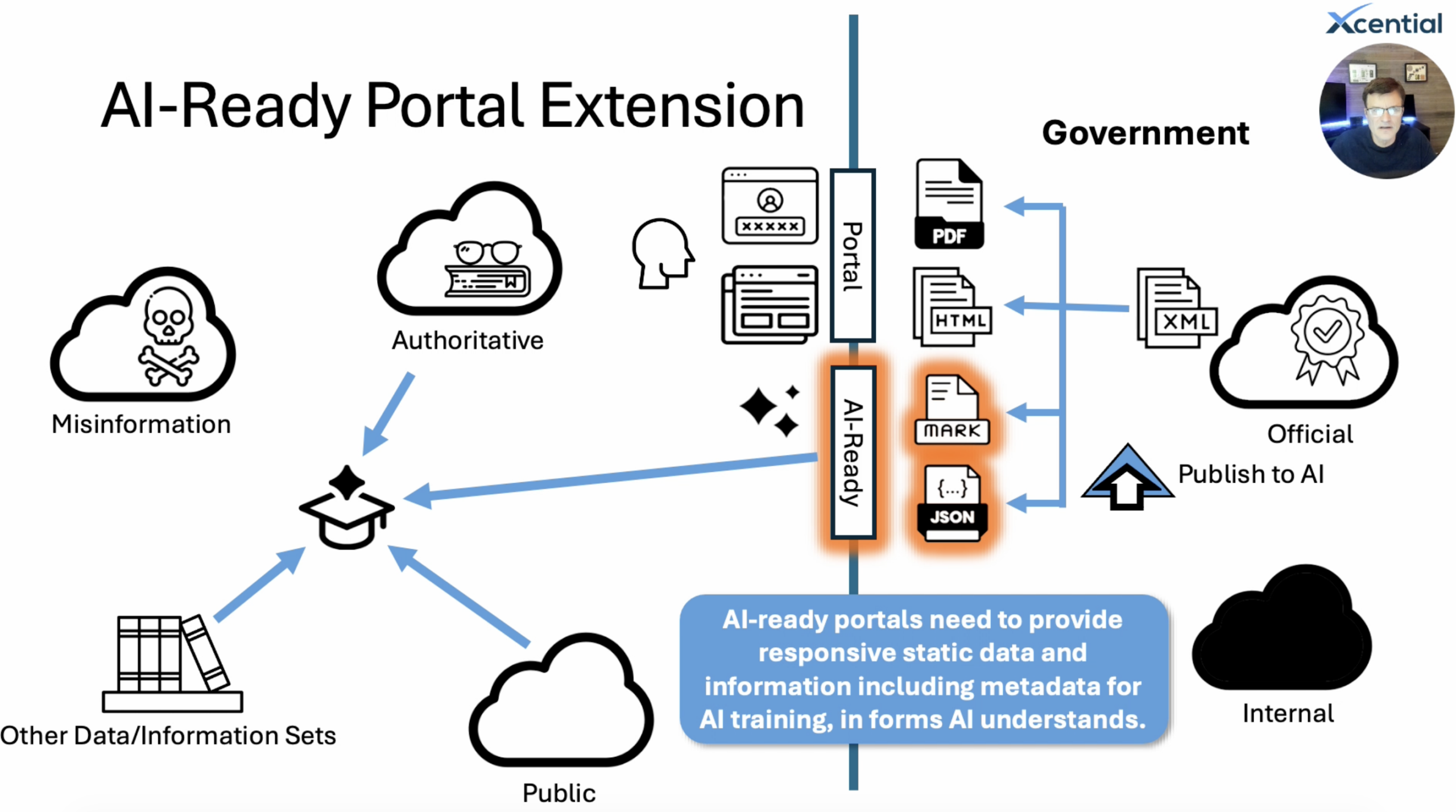
The Government Publishing Office grabbed the spotlight at the Congressional Data Task Force meeting on December 13 by announcing that it is launching a Model Context Protocol server for artificial intelligence tools to access official GPO publication information. The MCP server lets AI tools like ChatGPT and Gemini pull in official GPO documents when answering questions.

Continue reading

What Congress Can Learn from Lusophone Parliaments About Modernization and AI

On December 16th, a panel of senior parliamentary officials and legislative technologists from across the Portuguese-speaking world offered a rare, comparative view into how legislatures are digitizing their work—and what breaks when they do. The conversation brought together Luís Kimaid (Bússola Tech) as moderator, Pedro de Neri, Secretary-General of Angola’s National Assembly, Luiz Fernando Bandeira de Mello, former Secretary-General of the Brazilian Federal Senate, Hugo Tavares of Portugal’s Assembly of the Republic, Ambrósio Alves Soares of Mozambique’s Assembly of the Republic, and Juliano Bringer of Ágape Consulting.

Read more: What Congress Can Learn from Lusophone Parliaments About Modernization and AI

Taken together, their experiences span parliaments at very different stages of institutional maturity—but they surface a common set of second-order lessons that should resonate in Washington.

Across countries, the panelists converged on a counterintuitive insight: technology is rarely the hard part. The real constraints are political sequencing, procedural design, and institutional trust. Angola and Brazil demonstrated that starting with administrative dematerialization—budget workflows, document circulation, signatures—created the political and cultural conditions necessary to later digitize the core legislative process itself. Portugal, by contrast, illustrated a different challenge: once systems mature, frequent changes to rules and procedure become the primary obstacle to further automation.

Continue reading

Presenting Caucus Membership as Data

A key way to understanding the influence and position of different factions within the Democratic Caucus and Republican Conference in the House of Representatives is to study the major ideologically-based caucuses that almost all members join. Tracking caucuses’ members within the institution is hampered, however, by the lack of membership information in data provided by the House. Although most caucuses publish their rosters on their websites, the absence of that information in available structured member biographical data makes using it in congressional research laborious.

Continue reading