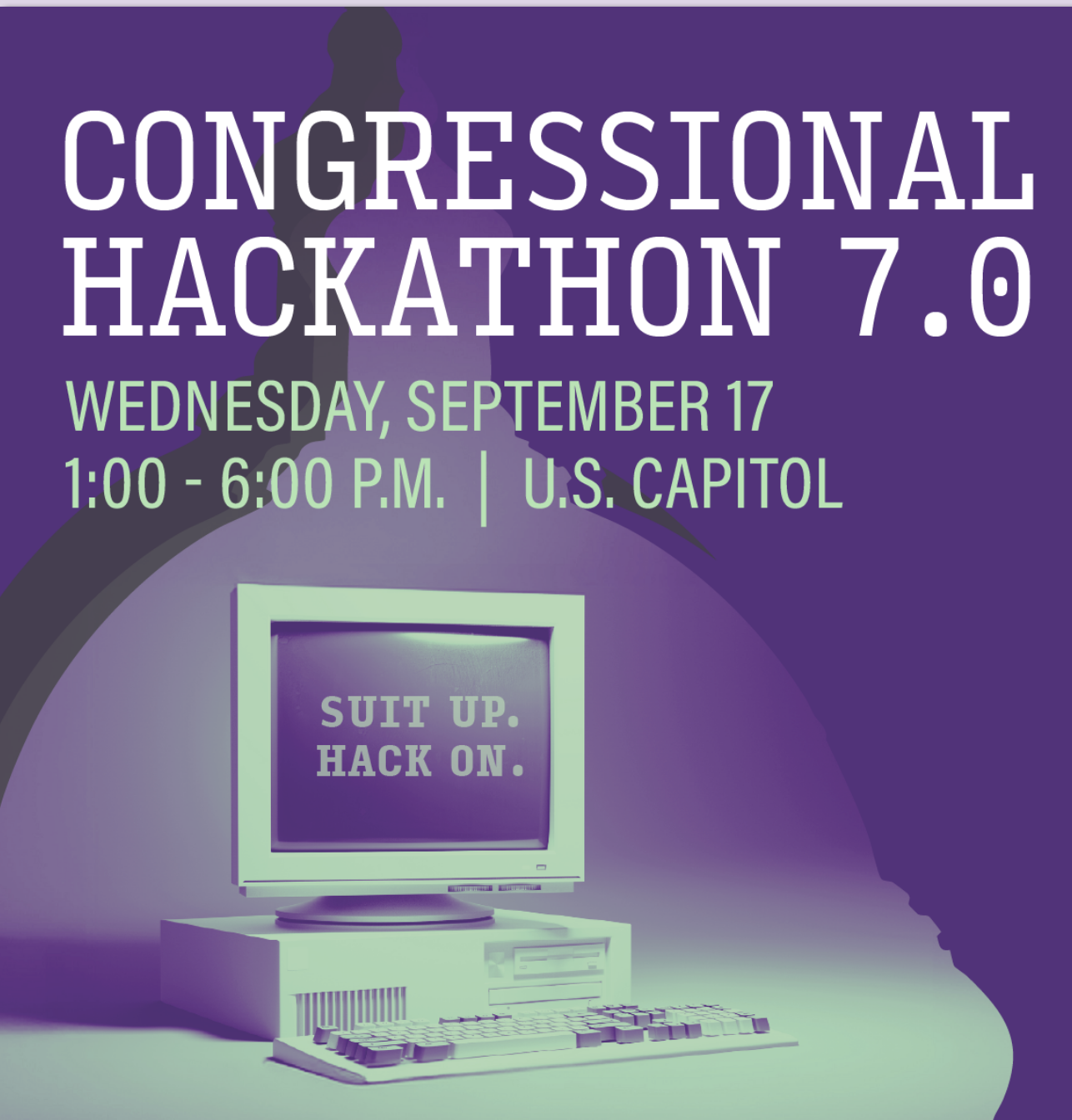
Congressional Hackathon 7.0: Coding, Collaboration, and Culture Change on Constitution Day

The Congressional Hackathon that took place this past Constitution Day on September 17, 2025, is a rarity in today’s Washington. Civic minded citizens joined with congressional staff in a day-long discussion inside the U.S. Capitol on strengthening Congress by improving and democratizing its technology. More information from the event, including video and a report, will be published on the Legislative Branch Innovation Hub.

The bipartisan nature of these events is a recurring theme, with senior Republicans and Democrats always offering opening remarks and providing space and support inside Congress. Indeed, the Speaker broke news at the Hackathon, announcing the House would be distributing up to 6,000 user licenses to congressional staff to use Microsoft’s M365 Copilot AI-powered chatbot for a year.

This is the seventh such Congressional Hackathon, with the first organized back in 2011. This iteration also was the fourth annual event in a row. I’ve been to them all and this event brought forth a groundswell of energy. Some of it came from the new coding breakout session, where almost 90 participants built tools side-by-side with congressional staff that provide insight and services to people in Congress, across government, and around the country. It reminded me of the civil society-organized hackathons of the 2010s that had so much energy and potential. We all owe a debt of appreciation to Speaker Johnson, Democratic Leader Jeffries, and CAO Catherine Szpindor for co-hosting.

Continue Reading
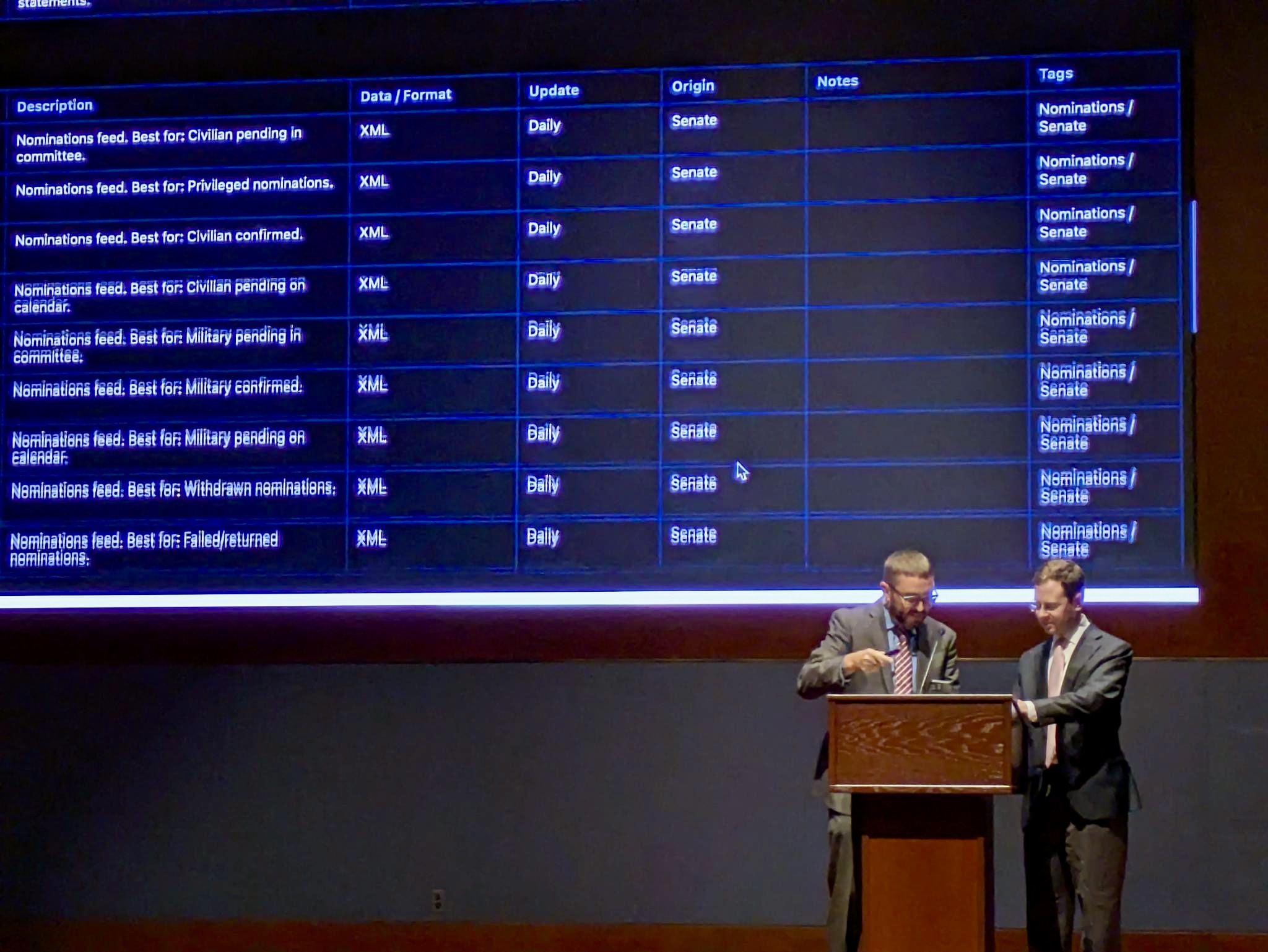
Legislative Branch Data Map

The House Digital Services Steve Dwyer and the Congressional Data Coalition's Daniel Schuman unveil version 0.1 of the Legislative Branch Data Map at the Congressional Hackathon 7.0 on September 17, 2025. Photo credit to Josh Tauberer.

One important project catalyzed by the 2025 Congressional Hackathon was the coming together of a Legislative branch data map, the existence of which had been requested by Appropriators. The map is an effort to identify across the Legislative branch the different sources for congressional data and drew rhetorical inspiration from the 2013 executive order on making open and machine readable the new default for government information, the 2018 Open Government Data Act, and advocacy from public-interest minded groups.

The map data was seeded from my 2023 biased yet reliable guide to sources of information and data about congress and collaborations from governmental members of the Congressional Data Task Force, although its GitHub repository quickly drew pull requests from hackathon participants as well. In other words, anyone can suggest items to add to the list of Legislative branch data sources and that list can point to official and non-official sources for data. The map improves the findability of information and makes it discoverable when someone has done the hard work to refine that information into a useful format.

Here is where you can find and suggest edits to the Legislative Branch Data Map, version 0.1.

Congressional Hackathon 7.0 announced for September 17

The Seventh Congressional Hackathon will take place on Wednesday, September 17th, from 1-6 pm in the CVC Auditorium at the U.S. Capitol. The non-partisan event was jointly announced by Speaker Johnson and Democratic Leader Jeffries and will be co-hosted by the House Chief Administrative Officer. The event is open to the public, and pre-registration is required. From the announcement:

Continue Reading

Congressional Hackathon Official Report

The House of Representatives just published its report from the 2024 Congressional Hackathon here.

Congressional Hackathon 6.0

Congressional Hackathon 6.0 took place on September 19, 2024 at the U.S. Capitol, co-hosted by Speaker Mike Johnson, Leader Hakeem Jeffries, and Chief Administrative Officer Catherine Szpindor. The event brought together congressional stakeholders to explore the role of digital platforms in the legislative process. After the event, organizers released video from the full proceedings as well as a highlights reel, and are expected to release a report summarizing the proceedings. You can find official resources on previous hackathons here.

Continue Reading

Congressional Hackathon and Congress.gov Forum This Week

Two of the biggest annual Congressional + technology events are both happening this week. On Wednesday, the Library of Congress will host a public forum on Congress.gov, and Thursday is the Congressional Hackathon. All the details are below

Continue Reading

Technology ideas for Congress?

The Congressional Hackathon is three weeks away. In anticipation, I’m gathering ideas from congressional staff and the public on what tools and apps should be available inside the Legislative branch.

What is your genius idea? Should there be a tool that allows staff to automatically schedule meetings with outside groups at free times on their calendar? An app that automatically summarizes written witness testimony and the committee memo into a two-page doc that includes draft member questions? A tracker that shows how busy each cafeteria is? Or collates all QFRs that relate to an agency?

Continue Reading

RSVP for Congressional Hackathon 6.0

Congress announced the Congressional Hackathon 6.0 will take place on September 19th from 1-6pm. Follow this link to RSVP. Here’s the announcement:

Continue Reading

Congressional Hackathon 5.0: September 14, 2023

The Speaker of the House, Minority Leader of the House, and the CAO co-hosted Congressional Hackathon 5.0 on September 14, 2023. There’s video from part 1 and part 2 of the event, a summary video, and the official report has just been released. The following is our recap of the event.

Continue Reading

Congressional Hackathon 5.0 Set for Sept. 14, 2023

Today Speaker McCarthy and Minority Leader Jeffries announced Congressional Hackathon 5.0, set for September 14, 2023 at the US Capitol. The official announcement is here. Here’s how they describe it:

“This event will bring together a bipartisan group of Members of Congress, Congressional staff, Legislative Branch agency staff, open government and transparency advocates, civic hackers, and developers from digital companies to explore the role of digital platforms in the legislative process. Discussions will range from data transparency, to constituent services, public correspondence, artificial intelligence, cybersecurity, committee hearings, and the broader legislative process.”

Continue Reading