Although there are several well-established software packages (and more coming soon) for managing constituent mail in congressional offices, comprehensive solutions for handling everything else are generally lacking. Managers still rely on email to direct most workflows, which leads to overstuffed inboxes and inefficiency.
Frustrated personally with this problem over his 20-plus years on the Hill, Jeremy Marcus finally left to start Made In Order, which is developing several software packages for congressional offices aiming to collapse multiple processes being done on spreadsheets and email chains into a single organizing system.
(I first met Jeremy when he was trying to build an earlier version of this software while still working in a House office years ago, and his progress is a testament to both his perseverance and the boost in the efficiency provided by current development tools.)
Made In Order has two components that have been waiting on CAO approval in the House since April: a vote tracking dashboard called MIO Vote, which organizes voting recommendations, live floor information, leadership recommendations and advocacy group positions, and records of similar past votes. This dashboard will be free for congressional users and is a kind of Dome Watch on steroids.
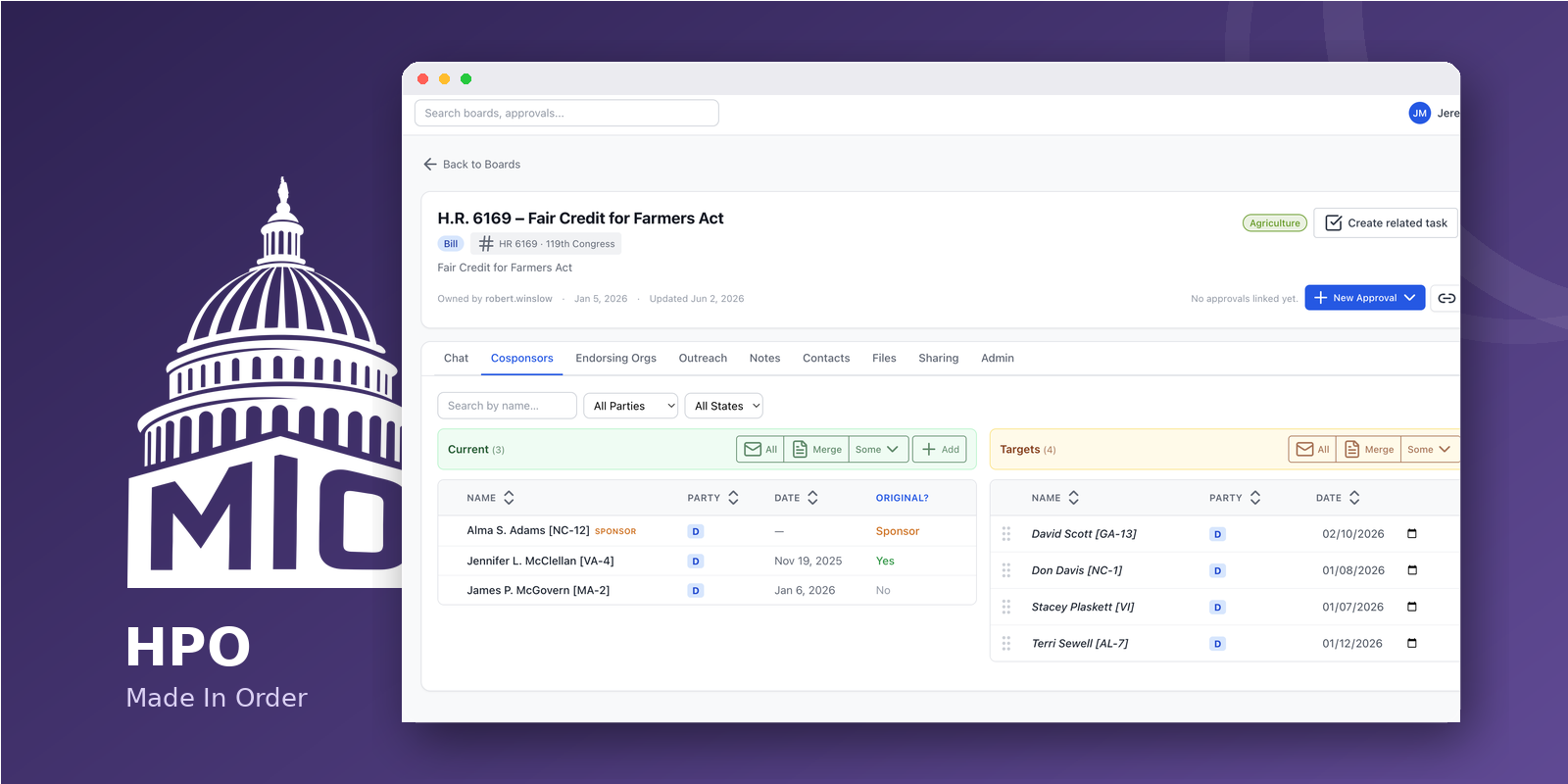
Made In Order’s House Personal Office (MIO HPO) dashboard is the other, paid component. Marcus has designed it around his own managerial experiences in House offices and from feedback from others working on the Hill with the goal of replacing inefficient and convoluted email-driven processes. The results are sophisticated, with a dashboard offering 19 different templates to track office functions. It allows managers to assign tasks to staff on the fly and organize approvals with the appropriate contextual information to make decisions and understand workflow. It also has a sophisticated legislative activity sub-dashboard that allows offices to organize co-sponsors, supportive organizations, and necessary outreach and the ability to track which staff have met with which outside organization or individual on the bill. Offices can share internal files on the platform and share documents to non-users without leaving the system.
Once approved, Marcus will offer the HPO component for a quarter of the cost of typical CRM platforms to encourage adoption. He’s also developing an advocacy-oriented version. Offices wishing to try HPO in the meantime can request access to the current test version, which can be experimented with using fake data.