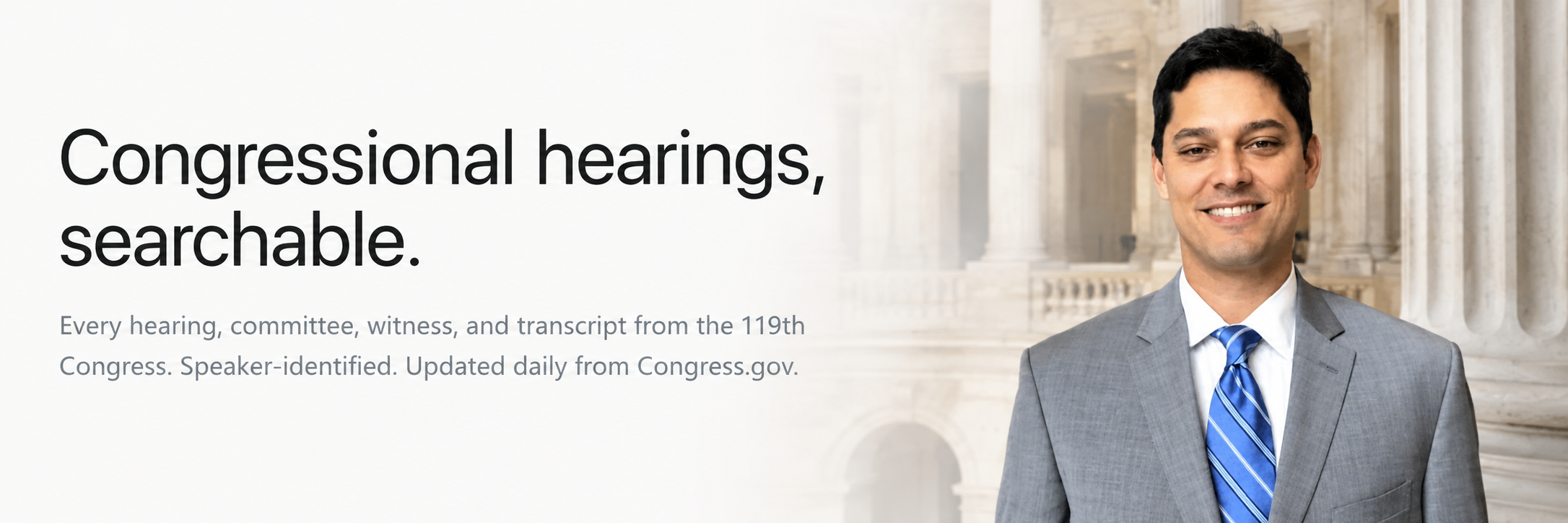
For this issue of Make Space, we highlight Capitol Labs’ comprehensive congressional hearing database. It’s the work of Jason Lemons, former VP at Prolegis and House staffer. Lemons described the project to me as an experiment in assembling a comprehensive set of data related to hearings under one hood. It builds upon what is available from the Library of Congress via Congress.gov APIs and committee videos to make the record of the hearing much more accessible and allow for analysis in ways that only otherwise exist on expensive subscription platforms.
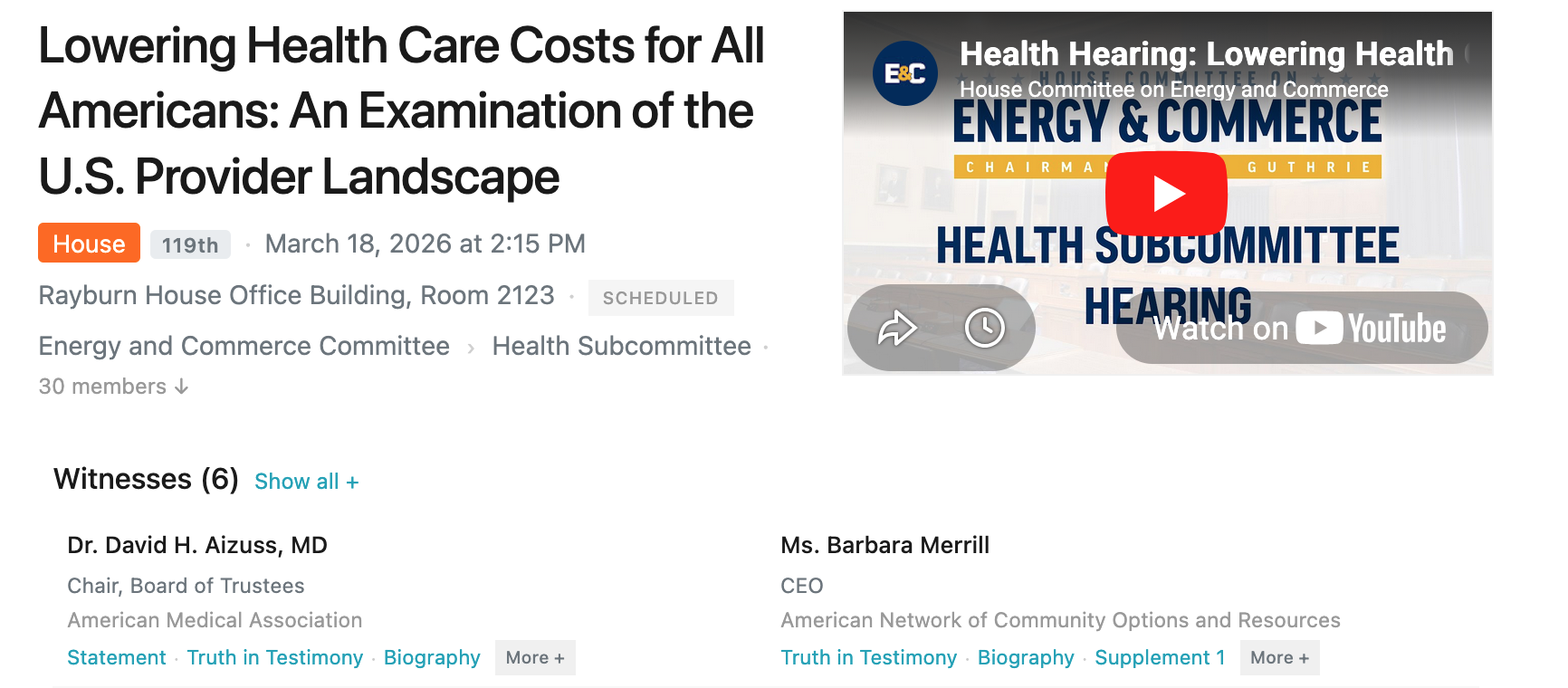
The major innovation of the platform is in how it generates transcript data. Yes, Congress.gov offers official transcripts of hearings: but these take months (often many) to be processed. They also do not contain the metadata like timestamps and speaker tags that are needed for anything beyond Ctrl-F search. Capitol Labs uses AI to transcribe hearing video and construct the improved metadata, so users can see not only what was said, but track how long witnesses and members spoke, pull out relevant sections of text, and link to specific moments in the proceeding.
The beefier metadata also allows searching for keywords across committee hearings, written testimony, and CRS reports as well as track all the times particular members have spoken at hearings. It even displays all the hearings at which an individual witness has appeared before committees, something that congressional stakeholders are working on but is not yet available.
At the moment, the platform is limited by the processing time of the transcripts, but Lemons has a goal of increasing the pace to about 30 to 40 a week. This project is part of a larger development effort, but is currently free once a user creates an account.