What Congress Can Learn from Lusophone Parliaments About Modernization and AI

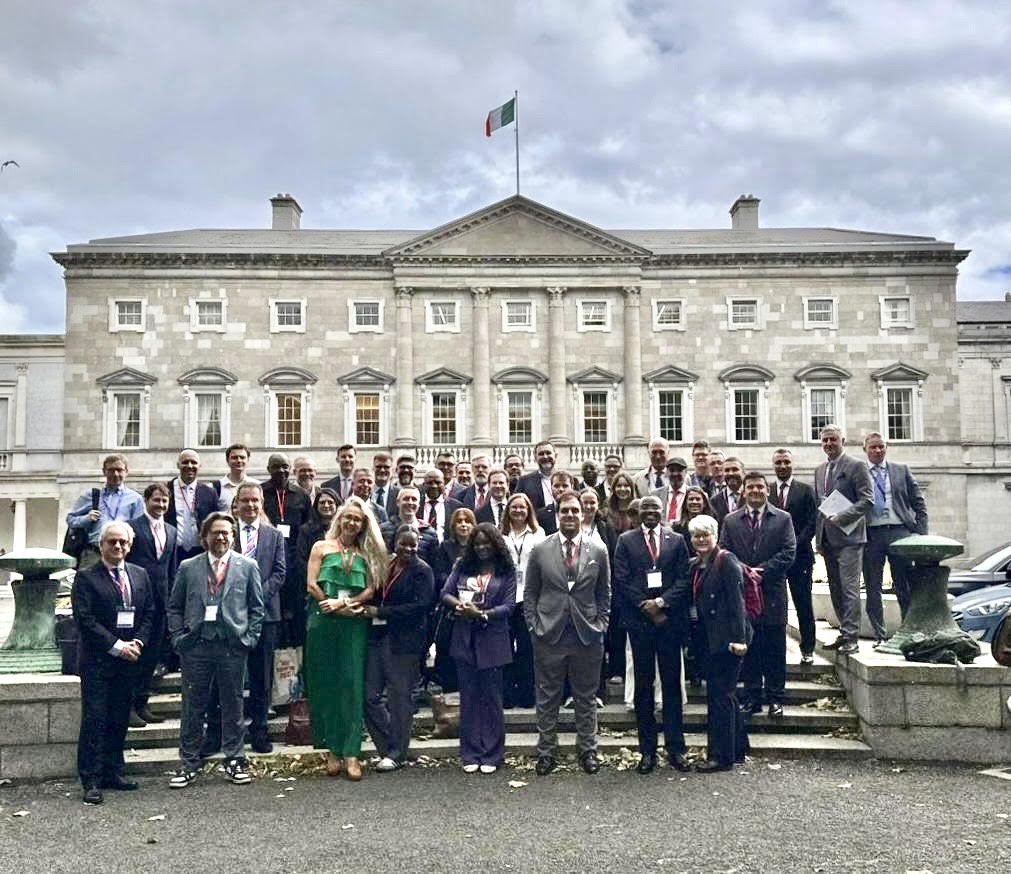
On December 16th, a panel of senior parliamentary officials and legislative technologists from across the Portuguese-speaking world offered a rare, comparative view into how legislatures are digitizing their work—and what breaks when they do. The conversation brought together Luís Kimaid (Bússola Tech) as moderator, Pedro de Neri, Secretary-General of Angola’s National Assembly, Luiz Fernando Bandeira de Mello, former Secretary-General of the Brazilian Federal Senate, Hugo Tavares of Portugal’s Assembly of the Republic, Ambrósio Alves Soares of Mozambique’s Assembly of the Republic, and Juliano Bringer of Ágape Consulting.

Read more: What Congress Can Learn from Lusophone Parliaments About Modernization and AI

Taken together, their experiences span parliaments at very different stages of institutional maturity—but they surface a common set of second-order lessons that should resonate in Washington.

Across countries, the panelists converged on a counterintuitive insight: technology is rarely the hard part. The real constraints are political sequencing, procedural design, and institutional trust. Angola and Brazil demonstrated that starting with administrative dematerialization—budget workflows, document circulation, signatures—created the political and cultural conditions necessary to later digitize the core legislative process itself. Portugal, by contrast, illustrated a different challenge: once systems mature, frequent changes to rules and procedure become the primary obstacle to further automation.

Continue reading

Presenting Caucus Membership as Data

A key way to understanding the influence and position of different factions within the Democratic Caucus and Republican Conference in the House of Representatives is to study the major ideologically-based caucuses that almost all members join. Tracking caucuses’ members within the institution is hampered, however, by the lack of membership information in data provided by the House. Although most caucuses publish their rosters on their websites, the absence of that information in available structured member biographical data makes using it in congressional research laborious.

Continue reading
Congressional Hackathon Logo

Congressional Hackathon 7.0: Coding, Collaboration, and Culture Change on Constitution Day

The Congressional Hackathon that took place this past Constitution Day on September 17, 2025, is a rarity in today’s Washington. Civic minded citizens joined with congressional staff in a day-long discussion inside the U.S. Capitol on strengthening Congress by improving and democratizing its technology. More information from the event, including video and a report, will be published on the Legislative Branch Innovation Hub.

The bipartisan nature of these events is a recurring theme, with senior Republicans and Democrats always offering opening remarks and providing space and support inside Congress. Indeed, the Speaker broke news at the Hackathon, announcing the House would be distributing up to 6,000 user licenses to congressional staff to use Microsoft’s M365 Copilot AI-powered chatbot for a year.

This is the seventh such Congressional Hackathon, with the first organized back in 2011. This iteration also was the fourth annual event in a row. I’ve been to them all and this event brought forth a groundswell of energy. Some of it came from the new coding breakout session, where almost 90 participants built tools side-by-side with congressional staff that provide insight and services to people in Congress, across government, and around the country. It reminded me of the civil society-organized hackathons of the 2010s that had so much energy and potential. We all owe a debt of appreciation to Speaker Johnson, Democratic Leader Jeffries, and CAO Catherine Szpindor for co-hosting.

Continue reading

Legislative Branch Data Map

The House Digital Services Steve Dwyer and the Congressional Data Coalition's Daniel Schuman unveil version 0.1 of the Legislative Branch Data Map at the Congressional Hackathon 7.0 on September 17, 2025. Photo credit to Josh Tauberer.

One important project catalyzed by the 2025 Congressional Hackathon was the coming together of a Legislative branch data map, the existence of which had been requested by Appropriators. The map is an effort to identify across the Legislative branch the different sources for congressional data and drew rhetorical inspiration from the 2013 executive order on making open and machine readable the new default for government information, the 2018 Open Government Data Act, and advocacy from public-interest minded groups.

The map data was seeded from my 2023 biased yet reliable guide to sources of information and data about congress and collaborations from governmental members of the Congressional Data Task Force, although its GitHub repository quickly drew pull requests from hackathon participants as well. In other words, anyone can suggest items to add to the list of Legislative branch data sources and that list can point to official and non-official sources for data. The map improves the findability of information and makes it discoverable when someone has done the hard work to refine that information into a useful format.

Here is where you can find and suggest edits to the Legislative Branch Data Map, version 0.1.

Congressional Hackathon 7.0 announced for September 17

The Seventh Congressional Hackathon will take place on Wednesday, September 17th, from 1-6 pm in the CVC Auditorium at the U.S. Capitol. The non-partisan event was jointly announced by Speaker Johnson and Democratic Leader Jeffries and will be co-hosted by the House Chief Administrative Officer. The event is open to the public, and pre-registration is required. From the announcement:

Continue reading